
We need to end the "School to Prison" Pipeline
Before I was diagnosed as autistic, as a child, as a teenager I spent a lot of time bouncing between classrooms and schools. I ended up attending a couple “alternative” schools, and then got bused into a “bad neighborhood” to attend the school there. As a white kid, I went from classrooms that had money to schools that had metal detectors on the way in. I got to see the “School to Prison” pipeline first hand. I think the way we treat some of our youth is criminal.
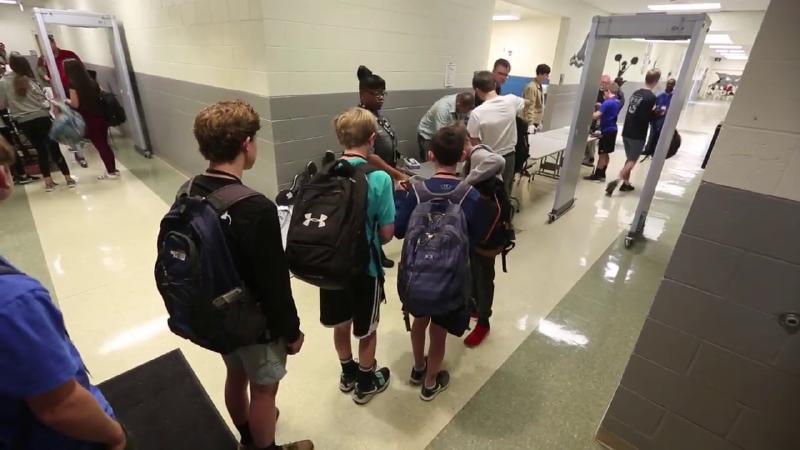
These schools are underfunded, understaffed, and overpoliced. These students don’t need more cops in the classrooms. They need caring teachers, after-school programs, healthy school lunches, and empathetic professional counseling they can trust and rely upon.
This is why I support Rep. Ayanna Pressley and Sen. Chris Murphy’s “Counseling not Criminalization in Schools Act” (S.2125), which would prohibit the use of federal funds for law enforcement officers in schools and replace these officers with personnel and services that supports mental health and provide other trauma-informed services.
We need to reform the private "charter school" system
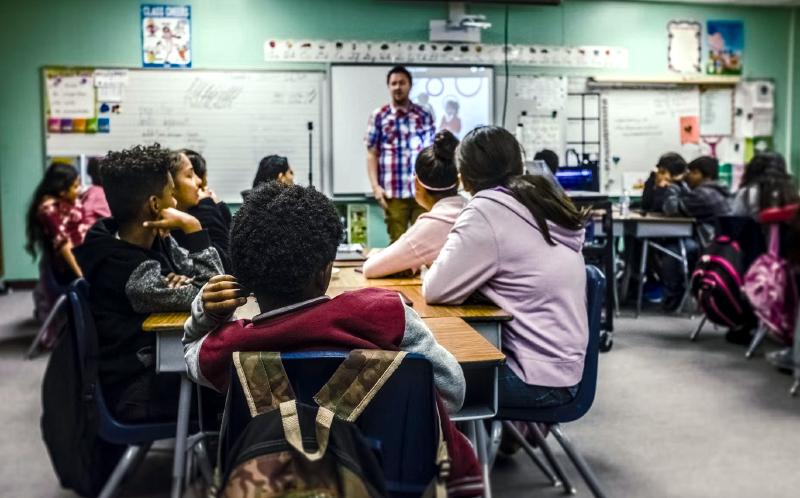
Charter schools are a hot topic these days. Some people see them as a savior of the school system while others see them as worse than what we had before. In some cases, and in some communities the charter school system has done wonders for access to education. In these communities, comparative test-scores show real promise of this system at work.
But in other cases, and in other communities, the charter school system has had a devastating effect. In these communities, the test scores fall lower – sometimes much, much lower – than nearby public schools with the same or less funding. On top of that, many charter schools fail due to lack of funding, lack of attendance, or gross financial mismanagement – sometimes even, outright fraud.
What is surprising is that this is the desired outcome of the charter school system. The system is operating as intended and as designed.
Before charter schools became a thing, educators wanted to experiment with curriculum and try new teaching styles but were hampered by the various rules, regulations, and processes that restricted how educators could teach. Sometimes the existing political structures got in the way of progress, and so there was a deep desire to do something that could allow innovation and experimentation into education. This was about the early 90s to mid-2000s.
In order to break free from the bureaucracy, the “charter school” system was invented. The central idea was to replace government regulators as the central authority holding schools accountable, to instead let parental choice and “free market” or “free choice” dynamics dictate educational standards. The thought was that if you removed all the old, traditional, and stuffy accountability structures, educators could now be free to experiment. And then parents could choose among the options that are best available to them and “shop around” for the best outcome.

There are a couple problems however, that have appeared which in practice are getting in the way of this kind of system from flourishing. Mostly to do with the concept of “parental choice” and the “free market” dynamics of the implementation.
As a game designer I support free choice in any dynamic system where players are working independently towards gaining an advantage and I also support “game mechanics” which optimize for the greatest good. I want free market mechanics to work. They just don’t… yet. And the reason for that is simple. A free market requires free choice and free choice requires an informed purchaser.
The first problem is that most parents often don’t know what options are available to them. In order for a parent to have free choice, they have to know what options they can choose from. Imagine if you were buying breakfast cereal for your family and there was no nutritional information on the box. Which brand do you buy? How do you know how much sugar is in it? What about the vitamins? You need that information on the side of the box to help you make an informed decision. Otherwise, all you have to base your decision on is some branding and a cartoon illustration and that does nothing to serve you, or your child. We are missing that “nutritional label on the box” for charter schools.
The second problem is that we don’t know what should go on that label! At the moment there is no easy to understand, quantifiable way for parents to compare the impact and effectiveness of different “educational architectures”, pedagogical approaches, or teaching methods. How can a parent know which methods might be better suited for their child if the qualitative aspects of those methods aren’t measured?
Each charter schools does things a little bit differently from others. Outside of extremely controlled research settings, we don’t have an effective way to link educational architecture, pedagogical approaches, or teaching methods to student outcomes. Even though states administer standardize testing and performance sampling through various ad-hoc assessments this only allows us to compare entire schools to one another. It cannot tell us which practices at that school led to a rise in scores.
Because of this laspe in measurement and data-collection we cannot assert a causal relationship between different educational architectures, pedagogical approaches, and teaching methods and their outcomes on students. We can measure the school, just not the techniques used at that school.
The blunt reality is that -- on the whole, according to the evidence -- charter schools aren't much better than traditional education.
The third problem is that we aren’t standardizing our successes. The blunt reality is that – on the whole, according to the evidence – charter schools aren’t much better than traditional education. It all averages out, and we haven’t seen any large gains across the board from this system. That said, there are definitely some big winners.
Some charter programs like KIPP have done wonders for disadvantaged youth and others from low-socioeconomic communities. The best charter schools measured the impact and value of their programs to their students and doubled down on the approaches that showed promise, growing their success, reputation, and students along the way. These successes and those who have been dedicated to it, should be celebrated by everyone.
So why aren't we standardizing these approaches and replicating their success?
I think it is time we start to integrate the most successful educational architectures, pedagogical approaches, and teaching methods from the most successful charter schools back into the standards for all of public education. We should standardize certain schools around certain charter school “model archetypes”, and then certify public schools as operating under that specific archetype, and thus regulated under the rules, standards, and practices applicable to that archetype.
We should base those regulatory standards on the evidence of what is working now. For example, if you are certified under the KIPP model archetype, then you are opting into being regulated under the KIPP rules, standards, and practices. If you are certified under the “arts and drama alternative” model, then you are opting into being regulated under those rules, standards, and practices.
Policy Outcomes #
- How do we replicate and expand the successes? I want to strengthen standards around “educational architectures”, pedagogical approaches, and teaching methods aligned to the model archetypes of successful charter school programs, and codify these models in law. Then I want to hold schools accountable to the same standards and regulations they have opted into.
- How do we actually elevate parental choice? I want to build an “Education Marketplace” of all charter schools, which surfaces complete statistical data, analysis, evidence, research and more so that parents can make informed decisions about their child’s education.
- What should go on the nutrition label? I want to develop measures around charter school program effectiveness which map the causation between specific standards, practices, and approaches and their educational outcomes.
- How do we ensure the integrity of the charter school system? We need to eliminate the for-profit motive in education. I want all charter schools nationwide to operate as non-profit entities, with salary caps for administrators. We should model Pennsylvania’s laws nationwide that help fight against conflict of interest.
- How do we protect our children’s education? Our children are not pawns to feed to amoral capitalist opportunists for the sake of greed and profit. They are our children. To help protect their education – in addition to all the above – we need to greatly strengthen teacher’s unions and teacher power throughout all of education, including at charter schools.